


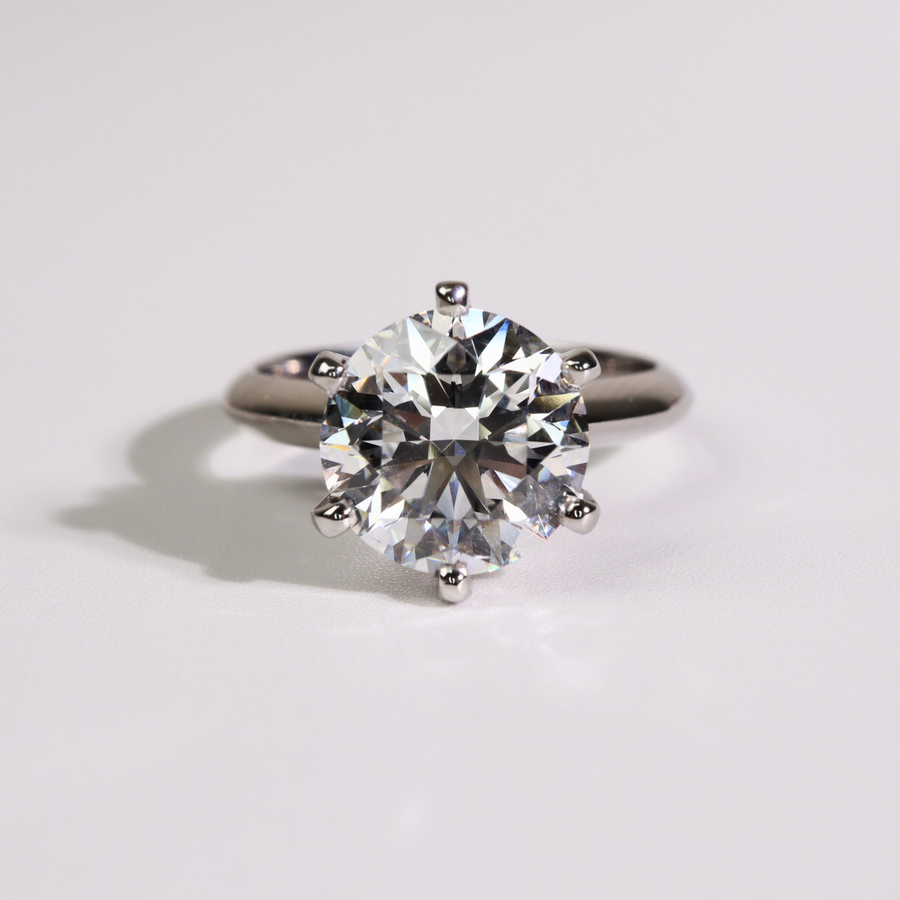
Esmira 1.7ct Round Lab Diamond Solitaire Engagement Ring
Ready to ship
- Metal: Platinum
- Centre stone: 1.7ct Round Lab Diamond, D Colour, VS1 Clarity, EX Symmetry and Polish, IGI Certified - LG605332306, None Fluorescence
- Finger size: L (Complimentary Resizing Available)
- Ring profile: Tiny Half Round, Six Claw, Upsweep Cathedral Setting
This piece is made to order in our Adelaide workshop. Please allow 4 to 6 weeks for production.
Our Camille style ring features a stunning 1.7ct round lab diamond held by six claws, set in high quality and durable platinum.
Our ready-to-wear collection is available for immediate shipping or in-store pickup and encapsulates the unique love story behind every piece.
Each creation at The Classic Jewellers is unique hence size, carat weight, and stone qualities can vary slightly from one creation to another.
1.75ct Lab RD D VVS2 ExExEx None IGI LG607367608 | 6 Claw Knife Edge 18K WG Band C81500
- Take it off before sleeping, exercising, swimming, gardening, showering or cleaning.
- Wipe it with a soft, lint-free cloth after each wear.
- For a deeper clean, use warm water, a drop of mild soap and a soft toothbrush. Avoid harsh chemicals such as chlorine and ammonia.
- Store each piece on its own in a soft pouch or box.
- Bring it to our Adelaide showroom once a year for a complimentary clean and inspection.
More in our jewellery care guide.
Warranty
Lifetime manufacturing warranty: if a defect in materials or workmanship appears, we repair or replace the piece at no cost. Lifetime warranty.
Delivery
Made to order in our Adelaide workshop in about 4 to 6 weeks. Shipping is free in Australia with Australia Post Express, tracked, signature on delivery, or collect it free from our Adelaide CBD showroom.Free express shipping in Australia with Australia Post Express, tracked, signature on delivery. In-stock pieces are dispatched in 1 to 2 business days and usually arrive 2 to 4 business days later. Click & Collect from our Adelaide CBD showroom is free. International orders ship for a flat $100 AUD. Shipping policy.
Returns
Made-to-order pieces cannot be cancelled or refunded once the order is confirmed and in production, and deposits are not refundable. If there is a manufacturing defect, tell us within 7 days of receiving it.Exchange or store credit within 14 days if the piece is unworn, unaltered and in its original packaging. This does not limit your rights under the Australian Consumer Law. Returns policy.

Adelaide showroom
Book an appointment
Visit our showroom at 94 Gawler Place, Adelaide, to view the collection with one of our jewellers. Walk-ins are welcome.
As seen on


Understanding the 4Cs
The Diamond Guide
Every diamond is graded on four qualities: carat, colour, clarity and cut. Natural and lab-grown diamonds are assessed in the same way by independent gemological laboratories such as IGI and GIA, so you can compare any two stones fairly. Here is what each one means, in plain terms.
4C's
Carat
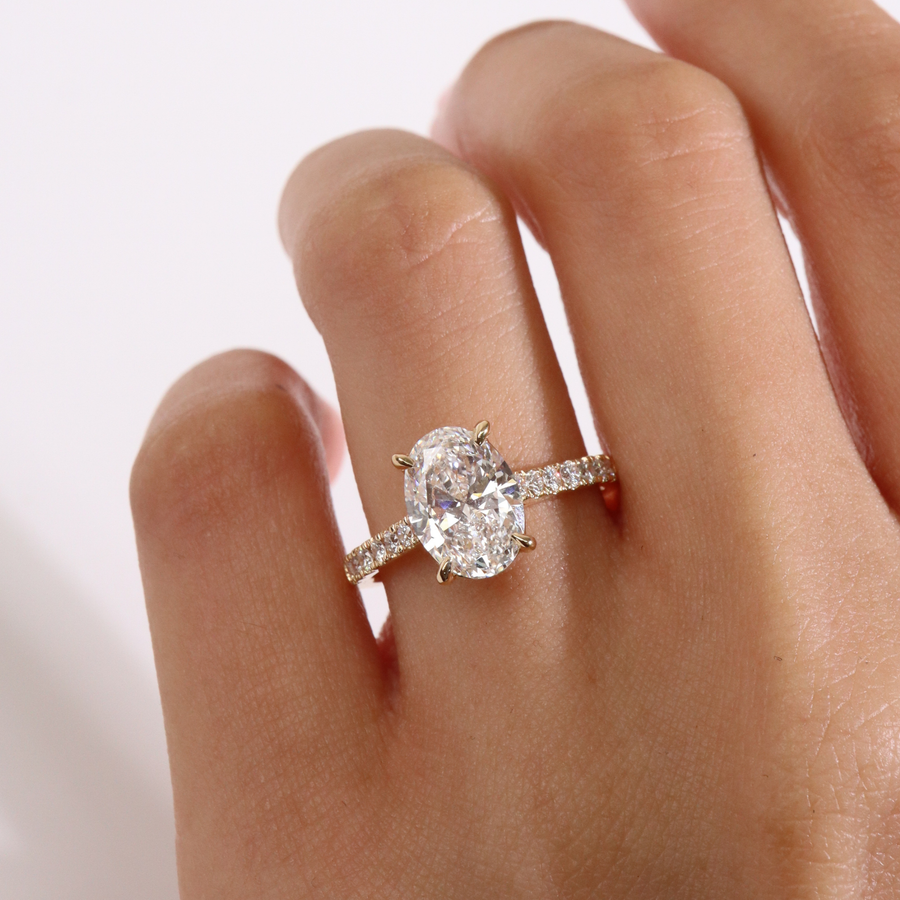
Carat is a diamond's weight, not its size. One carat is 0.2 grams. Two stones of the same weight can look quite different on the hand, because the shape and the cut decide how much surface you see from above.
A carat is the unit used to weigh diamonds. One carat equals 0.2 grams, and it is divided into 100 points, so a 0.50ct diamond is 50 points.
It matters for how big the diamond looks, but it is only one part of the value. Shape and cut change how large a stone appears, and carat weight is only one of the four Cs. Many couples choose a stone slightly under a round number such as 1ct and save without noticing any difference by eye.
Oval, marquise, pear and emerald cuts are elongated and show more surface area than a round of the same weight, so they tend to look larger on the finger.
4C's
Colour
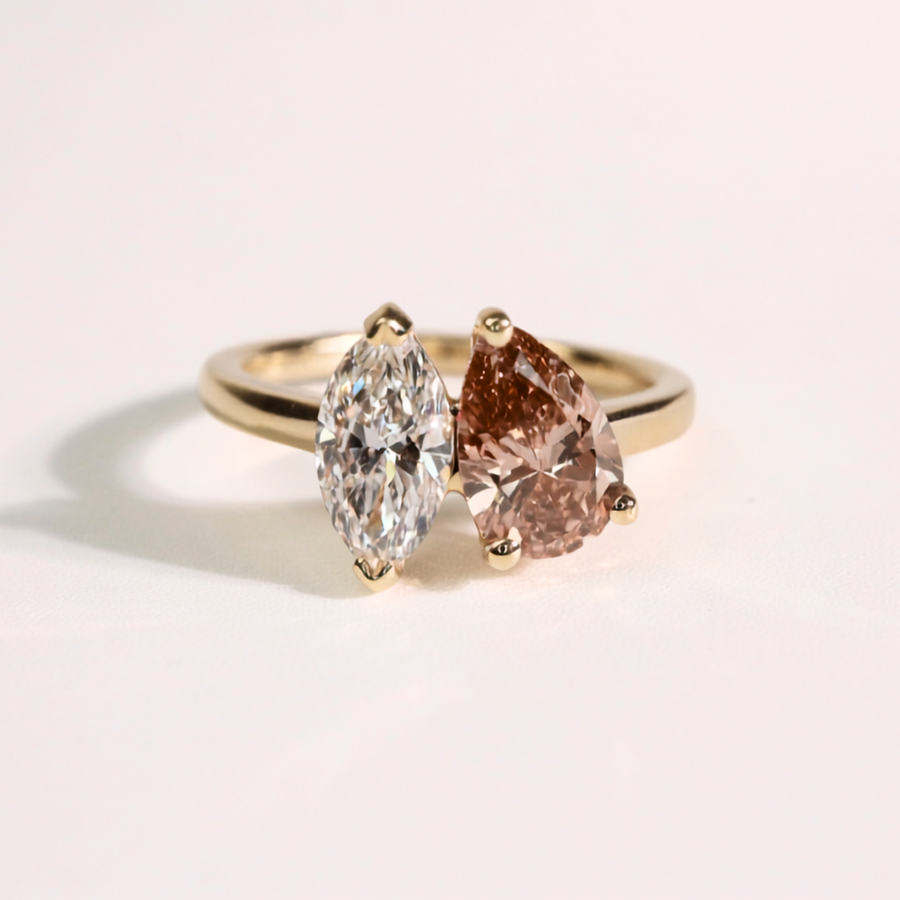
Colour is graded from D (colourless) to Z (light yellow or brown). The most valuable stones are colourless, but the difference between neighbouring grades is very small and often hard to see once a diamond is set.
Gemmologists compare the stone with a master set under controlled light. D to F is colourless, G to J is near colourless, and K and below shows a faint warm tone.
G to H looks bright and white in most settings. In yellow or rose gold a lower grade such as I can look just as good, because the warm metal blends with the stone.
Yes. White gold and platinum reflect a cooler light and show more warmth in the diamond. Yellow and rose gold hide it, which makes a near-colourless grade an easy choice there.
4C's
Clarity
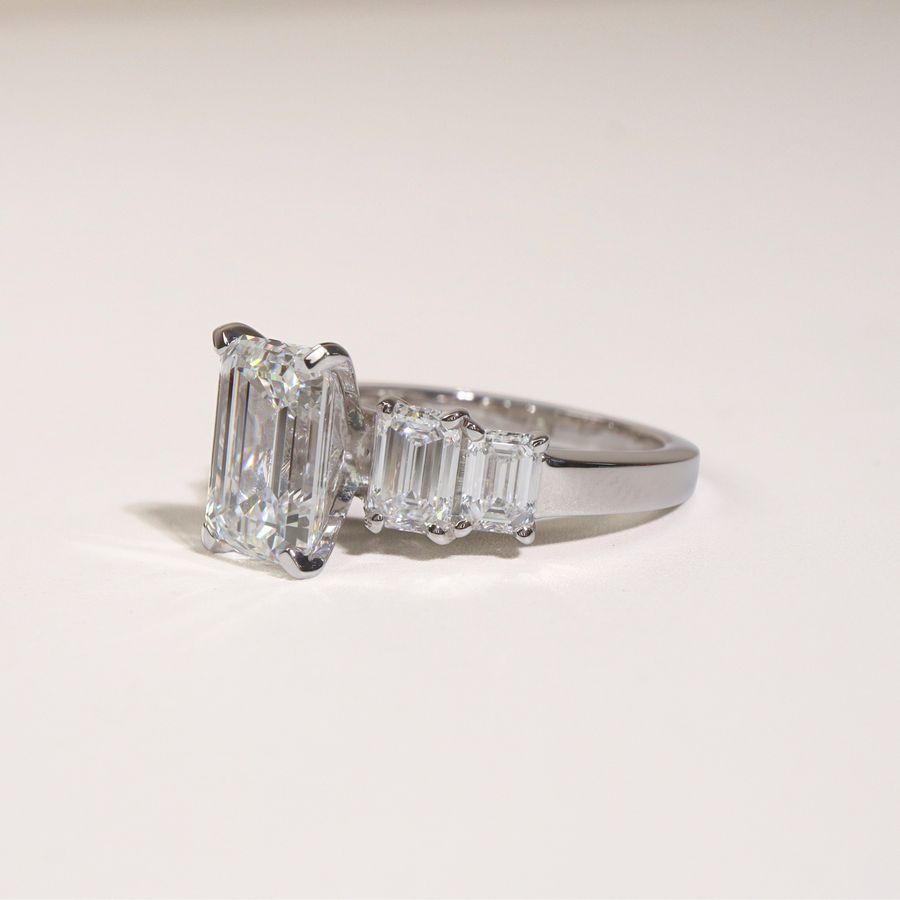
Clarity describes the tiny natural marks inside a diamond, called inclusions, and any marks on its surface. Most are too small to see without magnification, so a very high clarity grade often adds cost without adding visible beauty.
Inclusions are tiny natural features formed as a diamond grows, such as small crystals or fine feathers. They are what make each diamond unique.
The scale runs from Flawless (FL) and Internally Flawless (IF), through VVS, VS and SI, down to I. The grade reflects the size, number and position of the marks seen at 10x magnification.
VS2 and SI1 are often clean to the naked eye, so they are a popular choice. Larger stones and step cuts such as emerald show marks more easily, so we suggest a closer look at those.
4C's
Cut
Cut is about proportions, symmetry and polish, not shape. A well-cut diamond returns light to your eye as brilliance, fire and sparkle. A poor cut looks flat or glassy, whatever its size or colour.
Cut describes how well a diamond has been proportioned and polished. It is the one C shaped by people rather than nature, and it has the biggest effect on sparkle.
Shape is the outline of the stone, such as round, oval or pear. Cut is the quality of its facets and angles. Any shape can be well cut or poorly cut.
For round diamonds, Excellent or Ideal is the best choice. For fancy shapes, ask for good symmetry and polish, and choose a stone that sparkles evenly when we hold it up for you.
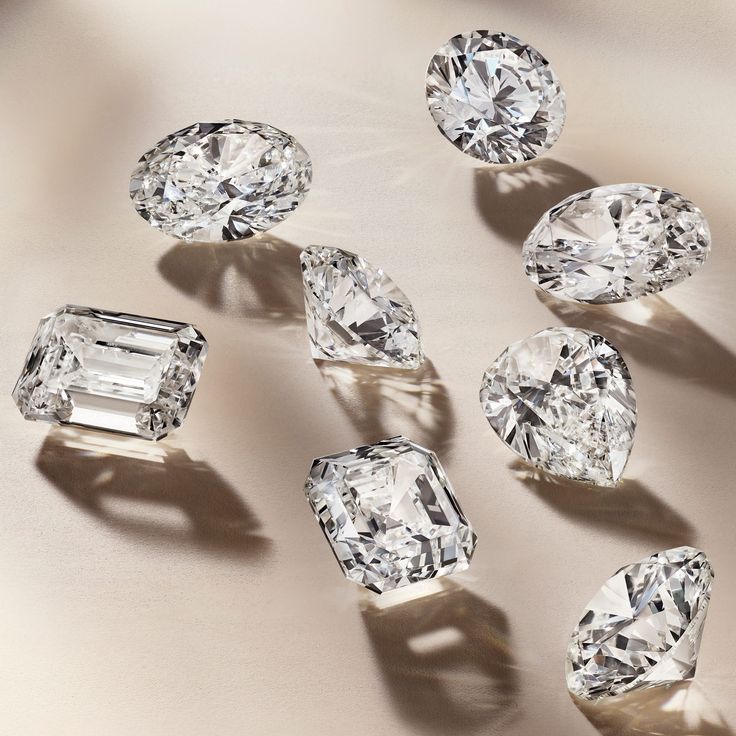
4C's
Lab-grown vs natural
Natural and lab-grown diamonds are the same material: carbon in the same crystal structure, with the same hardness, shine and sparkle. The difference is where they come from, and the price.
Yes. They are chemically, physically and optically diamond. They are grown in a laboratory rather than formed in the earth.
Yes. Both are assessed on the 4Cs by independent gemological laboratories such as IGI and GIA, and a lab-grown report states clearly that the stone is lab-grown.
Neither is better. Lab-grown diamonds usually cost much less for the same size and quality, so you can often choose a larger or higher-quality stone. Natural diamonds suit those who value a stone formed over a very long time. We are happy to show you both.